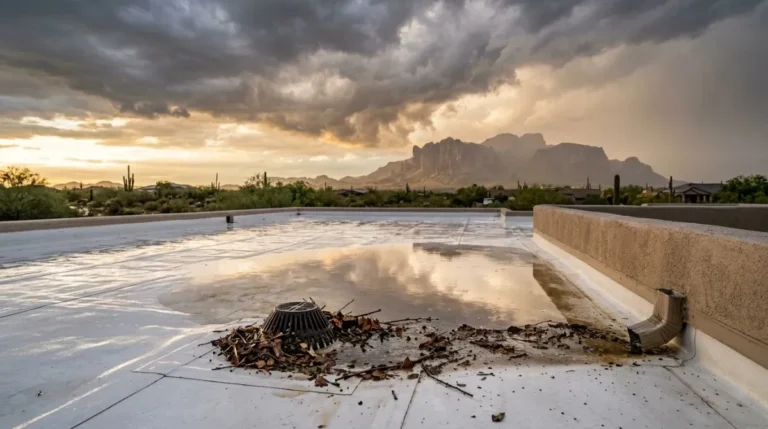
Slab Leak Signs: The Warm Patch, the Meter Test, and Why Phoenix Homes Get These
Short answer: the three earliest signs are a warm patch on the floor, the sound of running water when every tap is off, and a water bill that jumped without anything changing in the house. Any one of them is worth checking. Two together usually means you have one.
Slab leaks matter more here than almost anywhere, because of how Valley houses are built.
Why Phoenix gets these and other cities do not
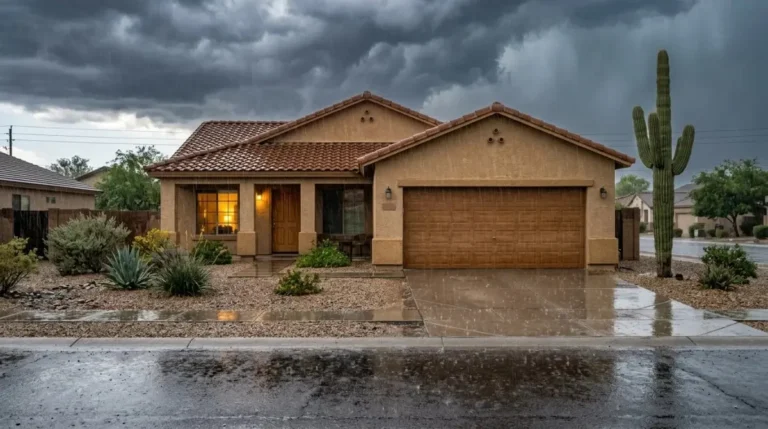
Almost every home in the Valley sits directly on a concrete slab. No basement, no crawl space. The water lines run underneath the concrete, which means there is no access panel, no inspection point, and nothing between the pipe and the ground it is buried in.
A leak in a house with a basement announces itself on a basement floor. Here it has nowhere to go but sideways and up — through the slab, into the base of the walls, and under whatever flooring is on top.
Sign one: a warm patch on the floor
This is the most reliable early indicator in a Phoenix home, and it is easy to miss because it feels like nothing.
In an air-conditioned Valley house the tile floor is cool almost everywhere. When a hot water line under the slab starts leaking, it heats the concrete above it, and a patch of tile becomes noticeably warmer than the floor around it.
Walk the house barefoot, early in the morning before the day heats up. You are feeling for a section that is warm when everything around it is not. It will often be a foot or two across, and in a line rather than a circle — because the pipe is a line.
Only hot lines do this. A cold-water slab leak gives you the other two signs instead.
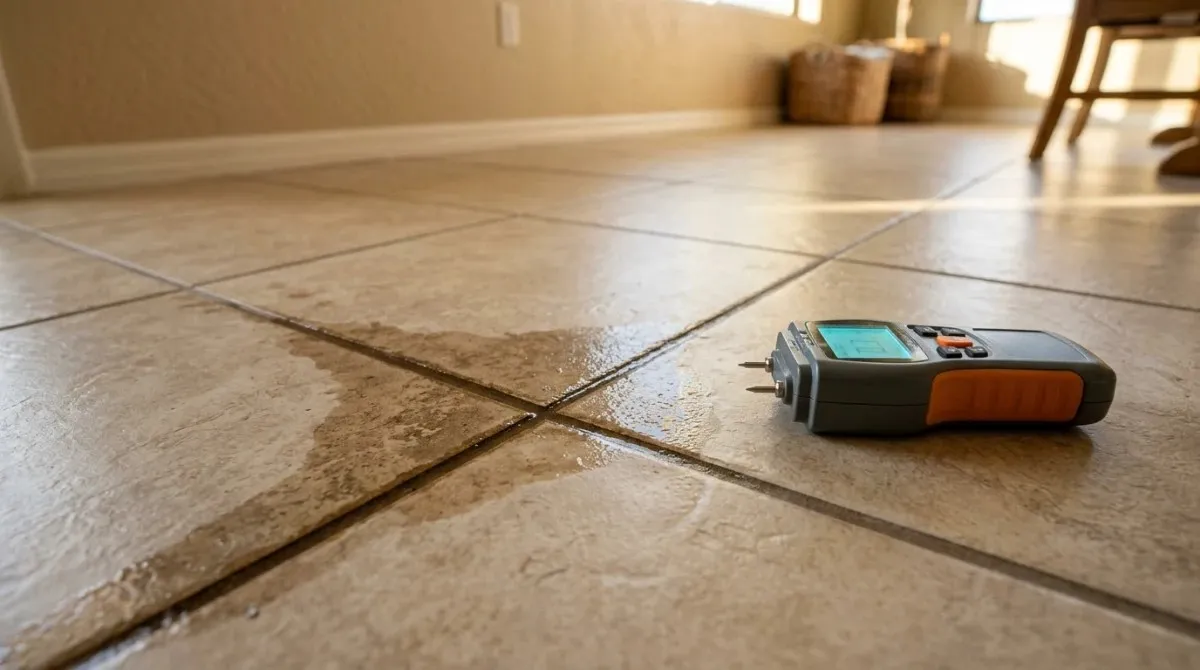
Sign two: the meter test
This one takes ten minutes and gives you a definite answer rather than a suspicion.
- Turn off every water fixture in the house. Taps, dishwasher, washing machine, ice maker, irrigation, evaporative cooler if you have one.
- Find the water meter and look at the low-flow indicator — the small dial or triangle that spins on very low flow.
- Watch it. With everything off, it should be completely still.
- If it is turning, water is moving somewhere. Write down the reading, wait two hours without using any water, and read it again.
A meter that moves with everything off means an active leak. It does not by itself tell you the leak is under the slab — it could be irrigation or a pool line — but it converts a vague worry into a fact worth acting on.
Sign three: the water bill
A sudden rise with no change in the household is the classic one, and the reason it gets missed is that people look for a dramatic jump. Often it is not dramatic. It is one bill that seems slightly high, then another, then a third.
Compare against the same month last year rather than last month — summer use in Phoenix is naturally much higher than winter, so month-to-month comparison hides things.
The quieter signs
- The sound of running water with every tap off, usually low and constant, often heard at night.
- A musty smell in one room with no visible cause — the leak has been wetting the base of the wall long enough for growth to begin.
- Flooring lifting or cracking — tile grout cracking in a line, or laminate cupping at the edges.
- A hot water heater running more than it used to, because it is heating water that is leaving under the floor.
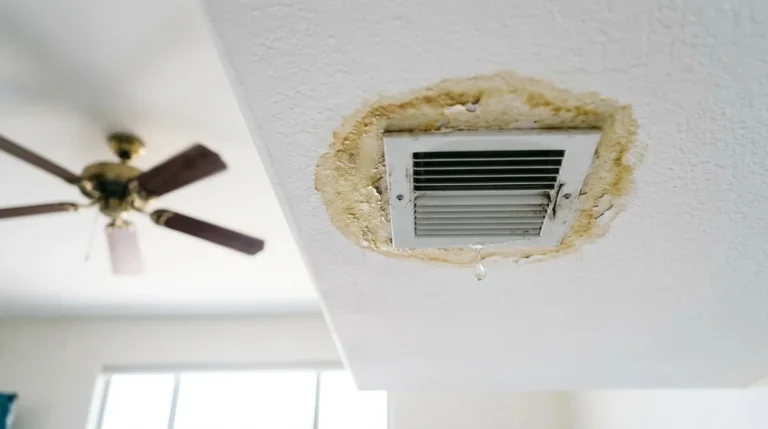
- Damp at the bottom of a wall, or paint bubbling in the bottom few inches. Water travels under the tile and wicks up into the drywall.
- An unexplained patch of green in the yard or grass growing faster in one spot near the foundation.
The post-tension complication
This is the part specific to Valley homes built from roughly the late 1970s onward.
Many use post-tension slabs — concrete with steel cables tensioned inside it. On a conventional slab, opening the concrete to reach a pipe is a plumbing job. On a post-tension slab, cutting a tendon is a structural event.
It changes the whole approach. Locating the leak precisely matters far more, because you cannot speculatively break concrete to go looking. It is also why rerouting the line overhead is often chosen instead of opening the slab at all.
If your house was built after about 1978, assume post-tension until told otherwise, and make sure whoever works on it knows.
How it gets located without breaking anything
Acoustic listening equipment picks up the sound of water escaping under concrete. Thermal imaging finds the heat signature of a hot line. Pressure testing isolates which line is losing water in the first place.
The point of all three is the same: find it before anything is opened. On a post-tension slab that is not a preference, it is the requirement.
What to do while you decide
If you are confident it is a hot line, shut off the water heater supply. It stops that leak while leaving cold water available.
Photograph anything visible, with dates — the warm patch, the meter, the bills, the damp skirting. Gradual damage claims turn on when you discovered it, and a dated record is worth having.
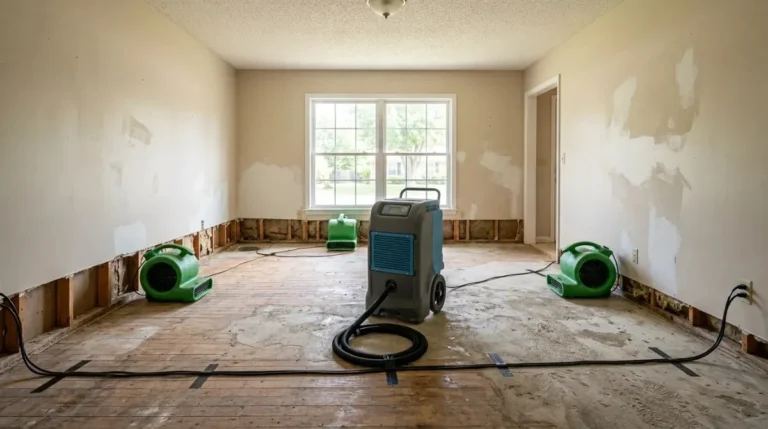
And do not put off the drying while the plumbing is sorted out. Mold growth can begin within 24 to 48 hours where moisture remains, and a slab leak has usually been running well before you noticed it.
The two trades this needs
A plumber finds and repairs the pipe. That does not dry the wall it has been wetting, and it does not deal with what is behind the skirting. Those are separate jobs and both are needed — which is worth knowing before you assume one quote covers everything.
If you have found one
One call connects you with a local restoration contractor covering Phoenix and the Valley. See water damage repair for the drying side, or mold remediation if there is already a smell.
Call (602) 962-2002 — emergency calls answered 24/7.