Water Heater Failure in Phoenix: The Warnings It Gives You First
Short answer: a tank water heater lasts 8 to 12 years, and Phoenix hard water pushes most of them toward the lower end of that. If yours is past ten, treat any warning sign as urgent rather than something to watch.
What makes this one different from every other water loss is that it almost always warns you first. Tanks rarely let go without weeks of noise, rust or dripping beforehand. Most people just do not know what they are listening for.
Why Phoenix is hard on water heaters
Valley water is hard, and hard water does two things to a tank.
It builds sediment. Dissolved minerals drop out of solution as the water heats and settle on the bottom of the tank. That layer then traps heat underneath it, so the burner has to run hotter and longer to do the same job. The steel is worked harder every single cycle.
It eats the anode rod faster. Inside every tank is a sacrificial anode rod — a metal rod designed to corrode instead of the tank walls. It is the whole reason a steel tank full of water lasts a decade. Hard water consumes it faster, and once the rod is gone, the tank itself starts rusting. From that point, failure is a matter of time.
That rod typically needs replacing every four to five years. Almost nobody does it, which is why so many Valley tanks fail nearer eight years than twelve.
The warning signs, in the order they usually come
- Rumbling or popping when it heats. That is steam forcing its way up through the sediment layer. It is the earliest sign and the most ignored.
- Rusty or discoloured hot water. Run the hot tap only. Brown or metallic-tinted water means internal corrosion — the anode rod has gone and the tank is going.
- The T&P valve dripping. The temperature and pressure relief valve on the side should not weep. If it does, either it has failed or the tank is running at a pressure it should not be.
- Less hot water than it used to give. Sediment takes up volume, so a 50-gallon tank stops behaving like one.
- Damp or rust around the base. This is no longer early. A tank that is weeping at the seam is a tank in its last weeks.
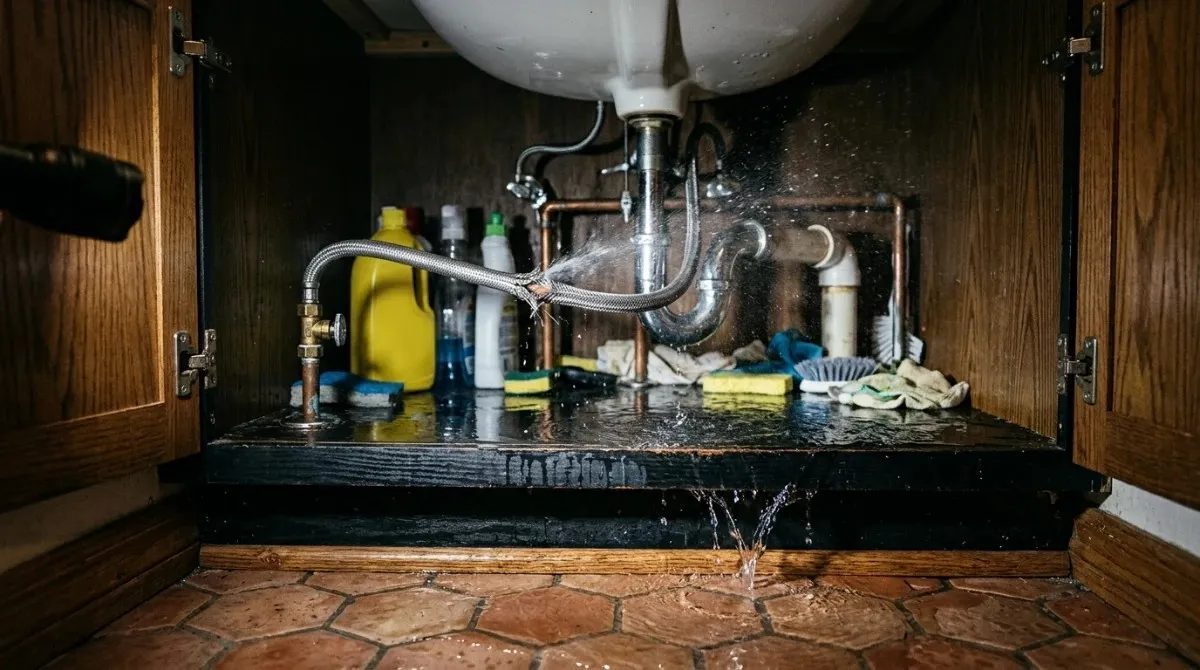
- Water pooling on the floor. Days, not months. Shut the water supply off.
Why the garage installation is the expensive version
Most Valley water heaters sit in the garage. Which sounds like the safe place for one — concrete floor, nothing valuable, a drain nearby.
The problem is the threshold. Garage floors slope toward the door, but the door into the house is usually at the far end and only an inch or two up. Forty or fifty gallons released at once does not politely find the roller door. It spreads across the whole slab, and a meaningful share of it goes under the internal door into hallway carpet, into the base of drywall, and along the wall plate.
And because it happens in a garage, it can run for a long time before anyone notices. That is the difference between a mopping job and a drying job.
Three things worth checking this week
- Find the age. The serial number on the data plate encodes the manufacture date — usually the first four digits as week and year, or a letter for the month. If it is over ten years old, you are on borrowed time regardless of how it seems.
- Check there is a drain pan under it, and that the pan is plumbed. A surprising number of Valley installations have a pan with no drain line, or a drain line that goes nowhere. A pan that cannot empty is a pan that overflows.
- Locate the shut-off valve now. It is on the cold inlet at the top. Turn it once so you know it moves. The night the tank fails is a bad time to discover a seized valve.
What actually extends the life
Flush the tank annually. It drains the sediment layer out before it can insulate the bottom. In a hard-water area this is the single highest-value bit of maintenance there is.
Have the anode rod inspected every two years, and annually once the warranty has expired. Replacing a rod is cheap; replacing a tank and a hallway floor is not.
Consider a leak-detection shut-off. A sensor on the floor that closes the supply automatically turns a fifty-gallon release into a small puddle. For a garage tank next to an internal door, it is the most sensible upgrade available.
If it has already gone
- Shut the cold supply at the valve on top of the tank, and turn off the power or gas to it.
- Photograph everything before moving anything, including how far the water reached.
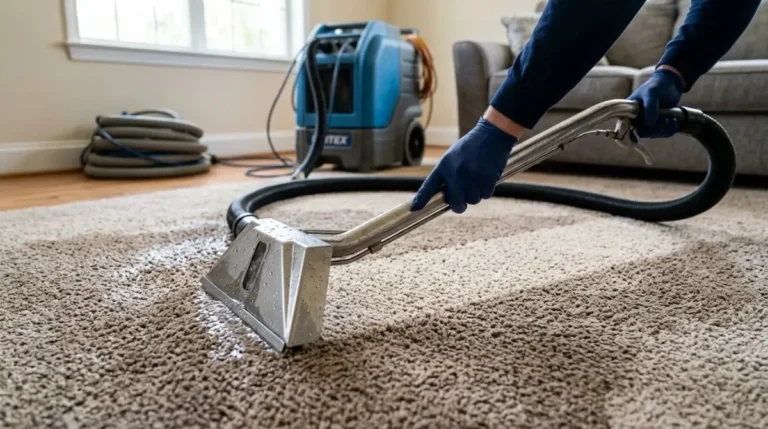
- Check inside the house at the threshold. Lift the carpet edge in the hallway if there is one — water travels under it further than it appears on the surface.
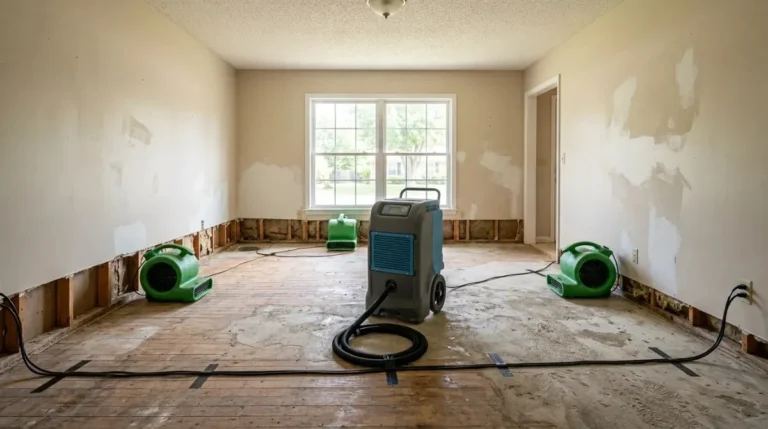
- Start drying immediately. Growth can begin within 24 to 48 hours where moisture remains, and the wall plate at floor level is exactly where it starts.
The insurance angle
A tank that fails suddenly is generally a covered sudden and accidental discharge. A tank that has been visibly weeping for months is where insurers start using the word maintenance.
Which is a practical argument for acting on the early signs rather than watching them: the same failure is treated very differently depending on how long it was obviously coming.
If you are dealing with one now
One call connects you with a local restoration contractor covering Phoenix and the Valley. See water damage repair for what drying involves, and how insurance treats water damage for the coverage side.
Call (602) 962-2002 — emergency calls answered 24/7.