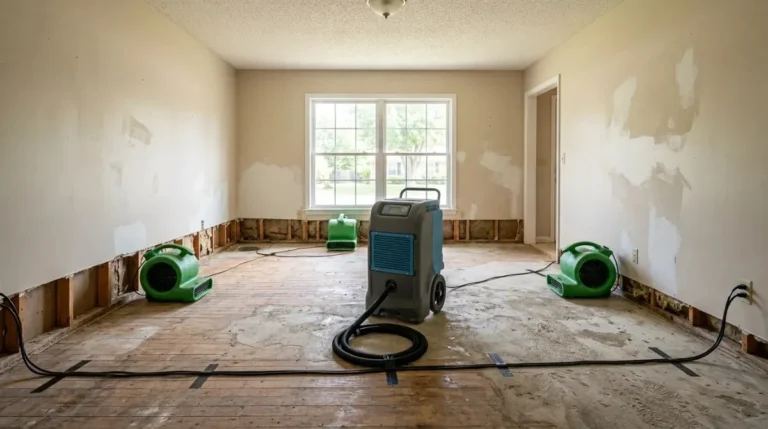
Water Damage vs Flood Damage: Why Your Phoenix Insurance Treats Them Completely Differently
Short answer: a standard homeowners policy covers water that escapes from inside your house — a burst supply line, a failed water heater, an overflowing appliance. It does not cover water that arrives from outside at ground level. That is a flood, and flood is excluded from every standard homeowners policy in the United States.
In Phoenix that distinction decides most monsoon claims, and a lot of people only learn it after the storm.
What counts as a flood, officially
“Flood” is not a loose description. FEMA’s Standard Flood Insurance Policy defines it as a general and temporary condition of partial or complete inundation of two or more acres of normally dry land, or two or more properties, from sources including overflow of inland water, unusual and rapid accumulation of surface water, and mudflow.
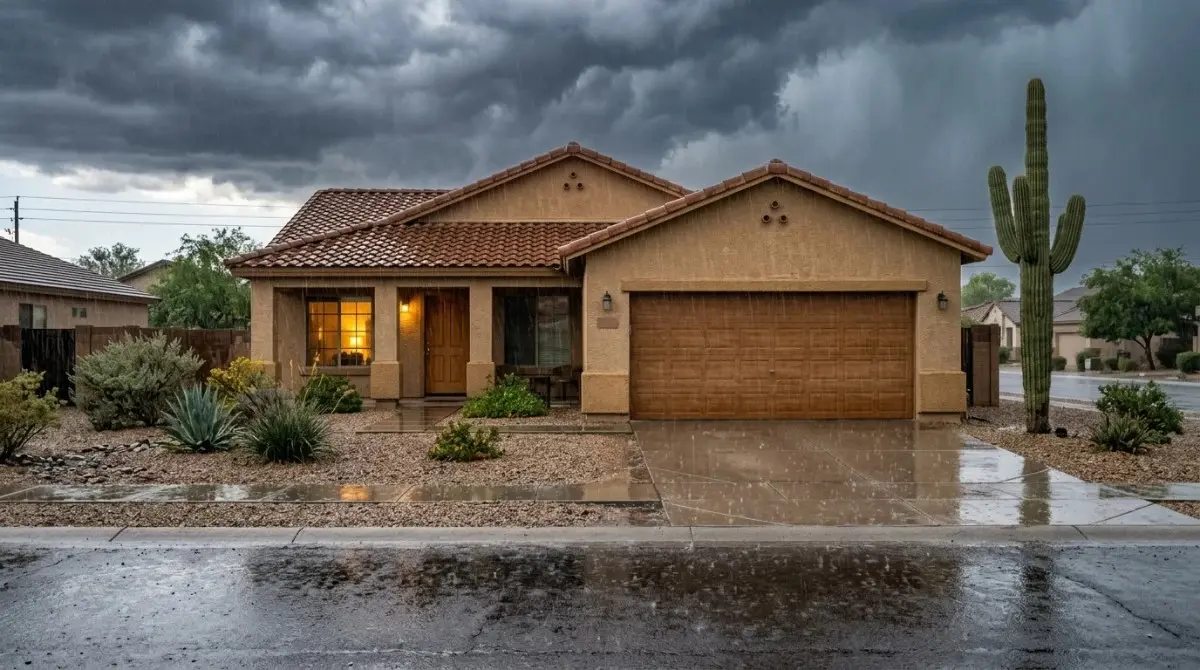
Read that again, because the second half is what catches Phoenix homeowners. It does not require a river. Rapid accumulation of surface water counts — which is exactly what a monsoon cell does to a street that cannot drain fast enough.
So the water that came under your door during an August storm is, in insurance terms, the same category as a river bursting its banks. Different scale, same exclusion.
What your homeowners policy does cover
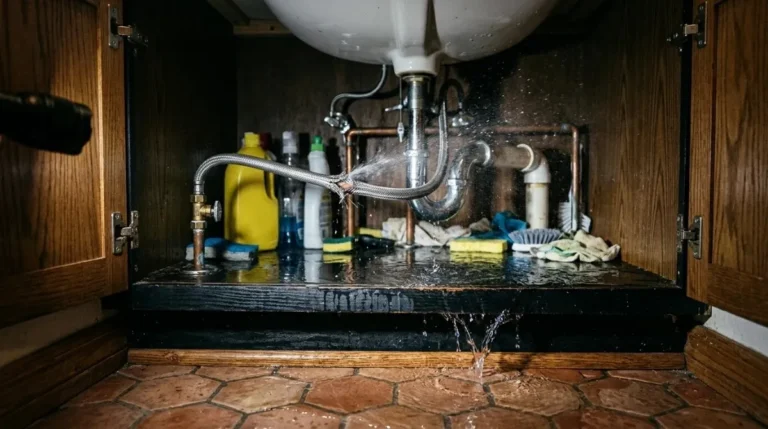
The phrase to look for in the policy is sudden and accidental. Standard coverage applies to discharge or overflow of water or steam from inside a plumbing, heating or air conditioning system, or from a household appliance.
In practice, that means:
- A supply line under a sink or behind a washing machine that lets go
- A water heater that splits — common here, because hard water is hard on tanks
- A pipe that bursts inside a wall
- An AC condensate line that backs up and overflows into a ceiling
- A dishwasher or washing machine that overflows
The event has to be sudden and it has to be unexpected. Both words matter.
What it does not cover, even though the water came from inside
This is where most denials actually happen — not on flood, but on gradual damage.
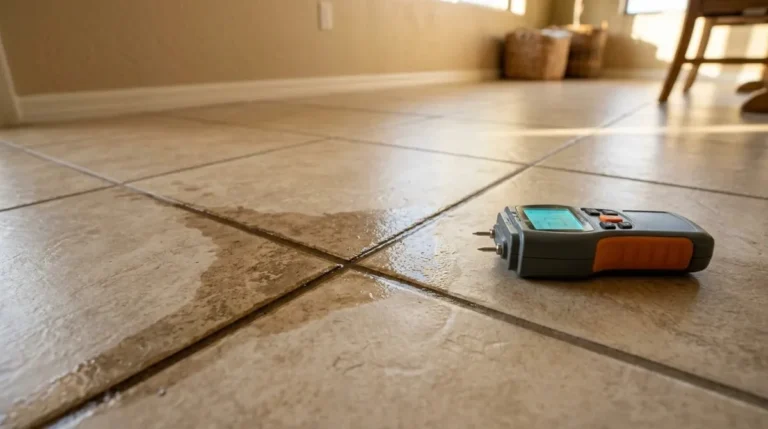
Policies commonly exclude “continuous or repeated seepage or leakage over a period of time.” The industry line is around fourteen days: damage from a leak that has been running longer than that is generally treated as a maintenance failure rather than an accident.
Which produces an outcome that feels unfair and is entirely consistent with the wording. A slab leak that has been quietly wetting the bottom of a wall for two months is a bigger, more expensive problem than a pipe that burst last night — and it is the one more likely to be denied, precisely because it was slow.
The same logic applies to mold. Mold that follows a covered sudden loss is usually handled as part of that claim. Mold that grew out of a long-running leak nobody addressed usually is not, and many policies cap mold coverage separately regardless of cause.
The third category nobody mentions: sewer backup
Water coming back up through a floor drain, a shower or a toilet is neither of the above. It is not a flood, and it is not a sudden discharge from your own plumbing system.
Sewer and drain backup is excluded from a standard policy by default and has to be added as a separate endorsement. It is usually inexpensive to add, and most homeowners have no idea whether they have it. It is worth thirty seconds to check your declarations page, because Category 3 water is the most expensive kind to deal with — contaminated water means more material gets discarded rather than dried.
Why this matters more in Maricopa County than almost anywhere
Two numbers tell the whole story.
Maricopa County holds roughly 2,771 flood insurance policies in total. In a county of more than four million people. Effectively, almost nobody here carries flood cover.
And one in four flood insurance claims in Maricopa County comes from outside a designated floodplain. So the reasoning most people use — “I am not in a flood zone, I do not need it” — is contradicted by a quarter of the actual claims.
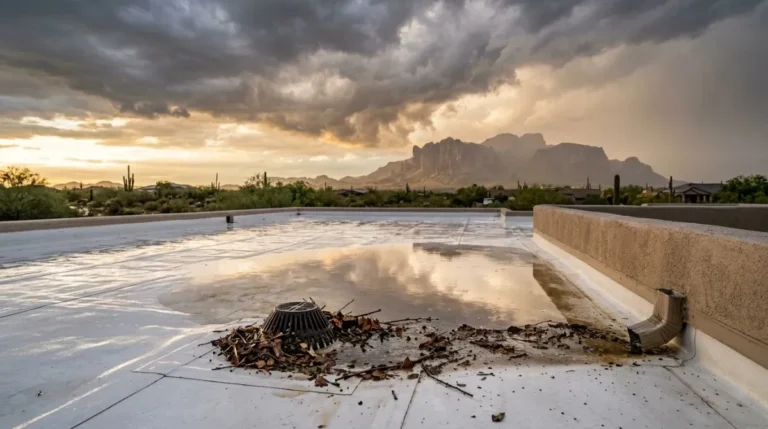
Put those together and you get the Phoenix pattern: a monsoon cell drops an inch of rain in twenty minutes onto ground that cannot absorb it, water finds the low doorway, and the homeowner discovers the exclusion afterwards.
Quick reference
| What happened | Usually covered by |
|---|---|
| Burst supply line, split water heater, appliance overflow | Standard homeowners policy |
| AC condensate overflow into a ceiling | Standard homeowners policy |
| Slow leak running for weeks or months | Usually nothing — treated as maintenance |
| Monsoon runoff entering at ground level | Flood policy only (NFIP or private) |
| Water backing up through a drain or toilet | Sewer backup endorsement only |
| Roof leak from storm damage | Homeowners, if the roof damage itself is covered |
What to do in the first hour, whatever the cause
Coverage is decided later. Documentation is decided now, and it is the part you control.
- Stop the water at the main valve if you cannot isolate the source.
- Photograph and film everything before anything is moved or cleaned. Wide shots and close shots, with dates.
- Note the time you discovered it. With a gradual-damage question, when you found it matters as much as when it started.
- Do not throw anything away until it has been photographed and the insurer has been told.
- Avoid standing water near outlets, cords or appliances. If you cannot safely reach the breaker panel, stay out.
- Start drying. Mold growth can begin within 24 to 48 hours where moisture remains, and no policy pays more because you waited.
One thing worth doing this week
Open your declarations page and look for two things: whether you have a sewer and drain backup endorsement, and whether you have any flood policy at all. Most Phoenix homeowners have neither, and both are decisions better made in October than during the next monsoon.
This is general information about how policies are typically written, not advice about your policy. Coverage varies by insurer and by wording — read yours, or ask your agent directly.
If you are dealing with it right now
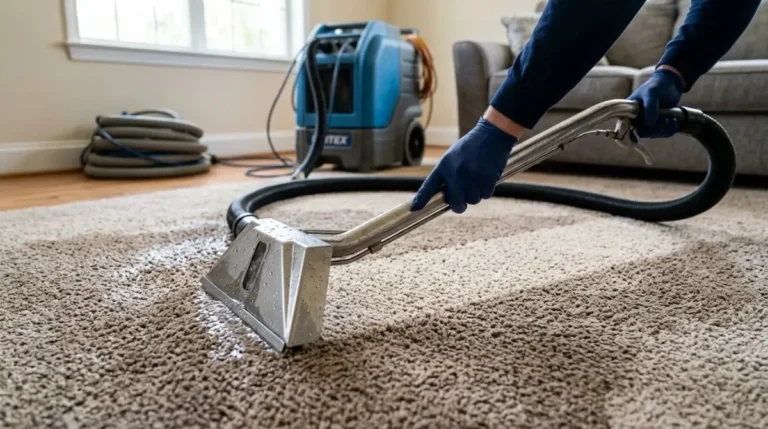
Whatever the source, the drying clock runs the same. One call connects you with a local restoration contractor covering Phoenix and the Valley — see water damage repair for what the work involves, or start here if you are not sure what you are looking at.
Call (602) 962-2002 — emergency calls answered 24/7.