The Monsoon Ends September 30 — and a Dry Year Is When Water Damage Hides Best
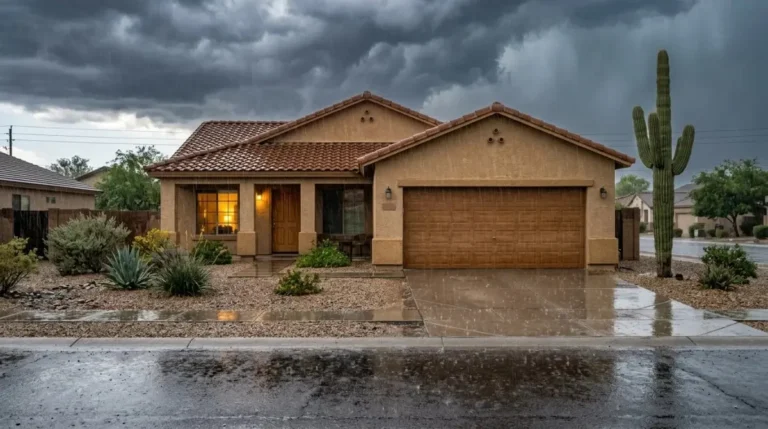
Short answer: Arizona’s monsoon officially closes on 30 September, and this one was unusually dry — Sky Harbor was sitting at roughly 1.2 inches across eight wet days by late August, well behind a normal season of about two and a half inches. That sounds like good news for your house. In one specific way it is the opposite.
A wet monsoon finds your weak points loudly. A ceiling comes down, a garage floods, a stain appears while you are standing in the room. You know, and you deal with it.
A dry monsoon finds the same weak points quietly. One or two storms get water past a tile or a parapet, the volume is small, it soaks into insulation and blocking instead of running through, and nothing appears downstairs. The opening is still there. The wet material is still there. The only thing missing is the evidence.
Why does a small leak stay hidden longer than a big one?
Because a ceiling stain is a volume event, not a water event. Drywall has to be saturated through before it discolours on the finished side, and before that happens the water is absorbed by everything above it — insulation, the top plate, framing, ceiling blocking.
A heavy storm overwhelms that buffer in an hour. A light one does not. It just charges it, and each subsequent storm tops it up.
This is the ordinary reason people discover in December that a roof has been leaking since July. Most roof leaks run for weeks or months before anybody sees them, and it is almost always the low-volume ones.
Where does monsoon water actually get into a Phoenix house?
Five places account for most of it, and none of them are the middle of the roof.
Parapet walls and the flat-roof perimeter. Phoenix has a lot of flat and low-slope roofing, and the failure is almost always at the edge rather than the field — the cap, the counter-flashing, the transition where flat meets pitched. Water gets behind the parapet and travels down inside the wall, so it can surface a room away from the roof.
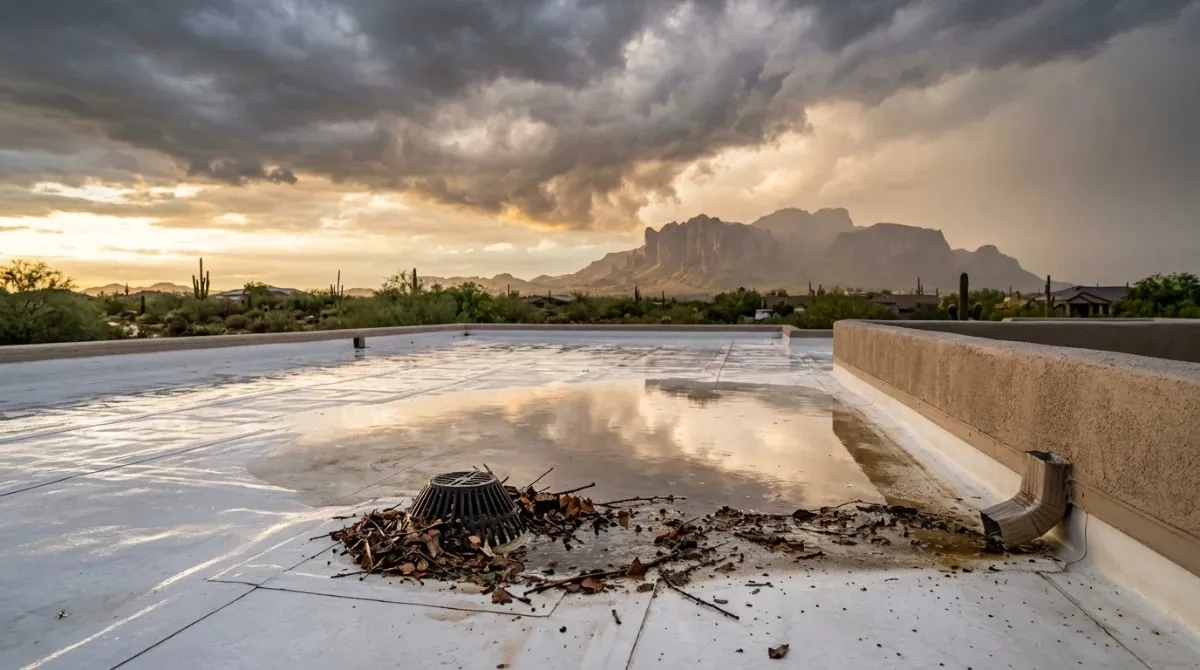
Scuppers and roof drains. A blocked scupper turns a flat roof into a shallow pool. Ponding water finds a seam that sheeting water never would, and the load itself opens joints.
Slipped or cracked tile, and the underlayment beneath it. On a tile roof, the tile is the rain screen and the underlayment is the actual waterproofing. Tiles look fine from the ground while the felt underneath has gone brittle in twenty summers of Phoenix sun. Wind-driven rain gets under the tile, and the layer that should stop it is no longer capable.
Wall penetrations on the storm side. Hose bibs, gas lines, satellite mounts, condensate line penetrations, weep screed that has been buried by a raised patio or new landscaping. Monsoon rain arrives sideways at 40 miles an hour and gets into openings that vertical rain never touches.
Ground that could not absorb it. This is the dry-year twist. Phoenix soil bakes to a hard, water-repellent crust through a rainless summer, so the first real storm runs off it rather than soaking in. More water reaches the foundation, faster, and it goes wherever the grading sends it.

What should you check now the season is over?
This is a walk round with a torch, not a project. Twenty minutes.
The ceiling of every room, in daylight, from an angle. Stand at the edge of the room rather than under the light. Early staining shows as a faint dull patch or a slight texture change long before it goes brown, and you will not see it looking straight up.
The top of every exterior-wall closet. Closets on outside walls are where parapet leaks show up first, and nobody looks at the ceiling of a closet.
Inside the attic, if you can get there safely. Look for dark streaking on the underside of the sheathing, matted or compressed insulation, and rusty nail points. Rust on a nail means condensation or a leak, and it takes weeks to develop.
The garage ceiling and the wall it shares with the house. Garages are unfinished, so a leak is visible for months before it would be anywhere else — and almost nobody inspects one.
Skirting boards on the storm-facing side. Kneel and feel along the bottom edge. Water that came in at grade shows there before anywhere else.
Smell each room with the door shut. Close it for a few hours, then walk in. A musty note in one room and not the others is worth taking seriously; it usually means something is wet inside a cavity where nothing is visible.
Does it matter that it has been sitting for weeks?
Yes, in two ways, and both are worth understanding before you call anyone.
The category has moved. Rain that came through a roof opening may have been clean the moment it landed. It is not clean now. Water sitting in a cavity degrades within a day or two, and after weeks it is contaminated, which changes what gets dried and what gets removed. There is more on that in our guide to water damage categories.
And your insurer has a word for slow. Policies pay for sudden and accidental and exclude gradual. A roof opened by a storm on a specific date is an event. The same opening, discovered in January after four months of quiet wetting, gets argued about — and the longer the gap, the more the argument runs against you.
Which is the real reason to do the walk-round in October rather than waiting for the ceiling to tell you. You are not only limiting the damage, you are keeping a date on it.
What if you find something?
Photograph it before anything else, with the date, wide and close.
Do not paint over a stain. It comes back, and you have destroyed the timeline in the meantime.
Do not open the ceiling yourself. Wet drywall over a light fitting or a junction box is not a place to start pulling, and if there is growth above it you will spread it through the house.
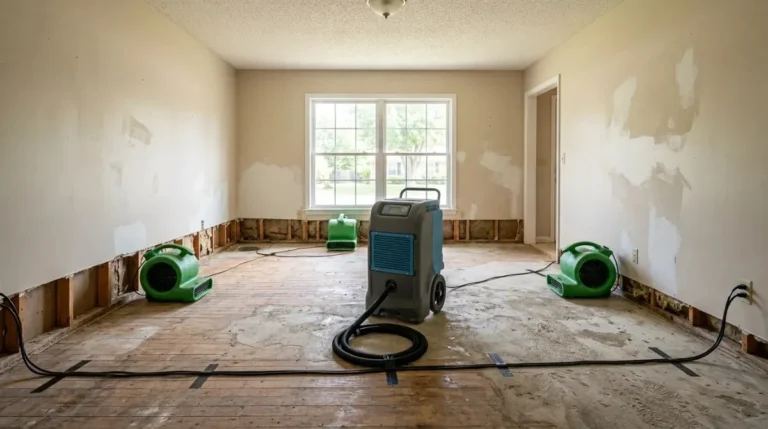
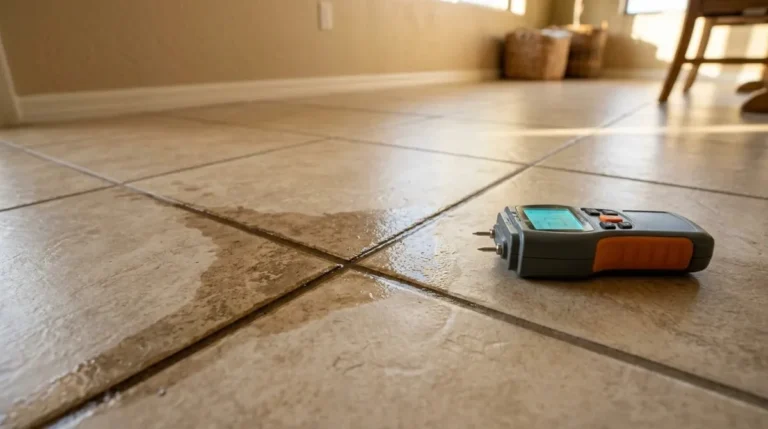
Get moisture readings before demolition. A meter and a thermal camera map how far the water actually travelled, which is nearly always further than the stain suggests. That map is what the scope is built on, and what the adjuster is shown.
Get the roof looked at separately. Drying the inside while the opening is still there means doing it again after the first storm of next July.
The short version
A quiet monsoon is not the same as a dry house. Low-volume leaks are the ones that hide, they hide inside insulation and blocking rather than on your ceiling, and the two things that get worse with time are the contamination and your insurance position.
The season closes on 30 September. October is the month to look, while you can still put a date on what happened.
Found a stain, a soft patch of ceiling or a musty room? Call (602) 962-2002 and we will connect you with a local restoration contractor. If the room already smells before anything is visible, our mold remediation page covers what that usually means, and water damage restoration covers the drying side.