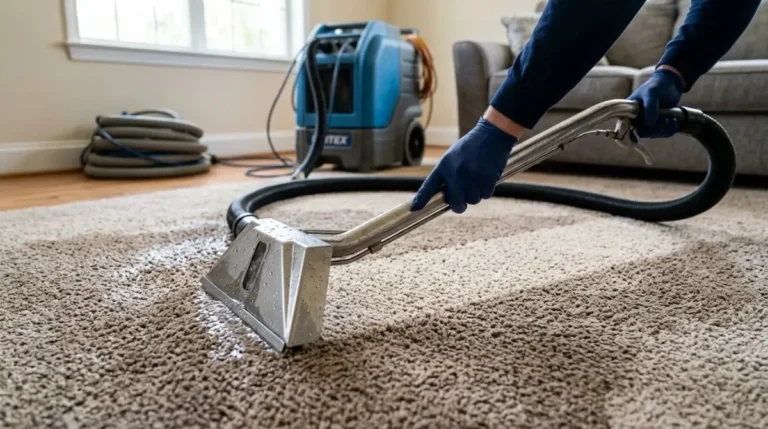
How Long Does It Take to Dry Out Water Damage? (And Why Monsoon Season Changes the Answer)
Short answer: most clean-water losses reach dry standard in three to five days with professional air movers and dehumidifiers running. Water that got into wall cavities, subfloor or framing takes longer. Hardwood flooring commonly runs one to three weeks, and a wet concrete slab can take a month.
But the number of days is the wrong thing to focus on, and here is why.
The calendar does not decide when it is dry — the readings do
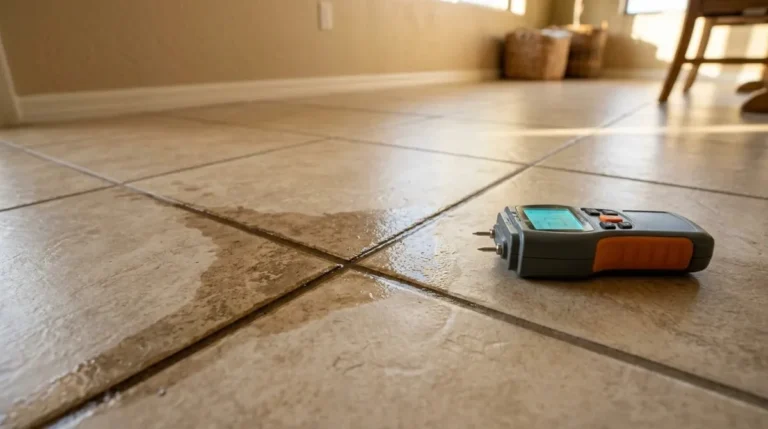
Drying is finished when moisture meter readings in the affected materials match unaffected reference material of the same type in the same building. Not when the surface feels dry. Not when a set number of days has passed.
That reference point matters. Drywall in a Phoenix house in August is not the same moisture content as drywall in a Seattle house in January, so “dry” is measured against the building itself rather than a universal number.
Which is why a good contractor takes readings every day, not just at the start and the end. The daily numbers are what tell you whether equipment is working or whether something has been missed.
What actually changes the timeline
- How long it sat before drying started. The single biggest factor. Moisture keeps travelling into materials for as long as it is there — a leak found in two hours and a leak found in two days are different jobs.
- What the water touched. Carpet and pad dry quickly. Drywall is slower. Hardwood, cabinetry and concrete are slower again.
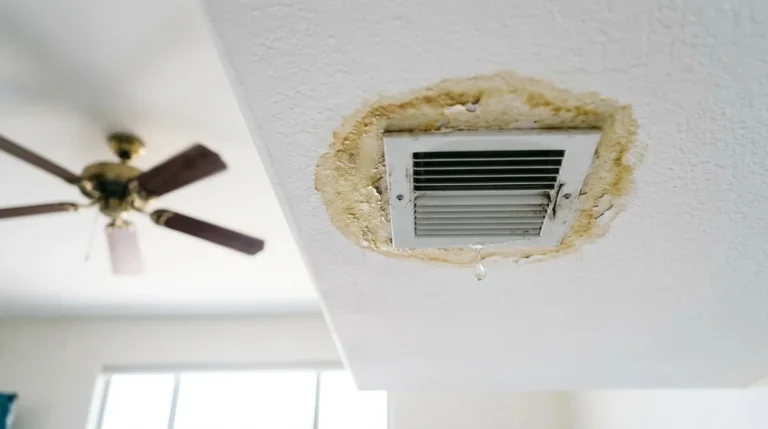
- Whether it got into a cavity. Surface water is straightforward. Water inside a wall, under a subfloor or beneath cabinet toe-kicks has almost no airflow reaching it.
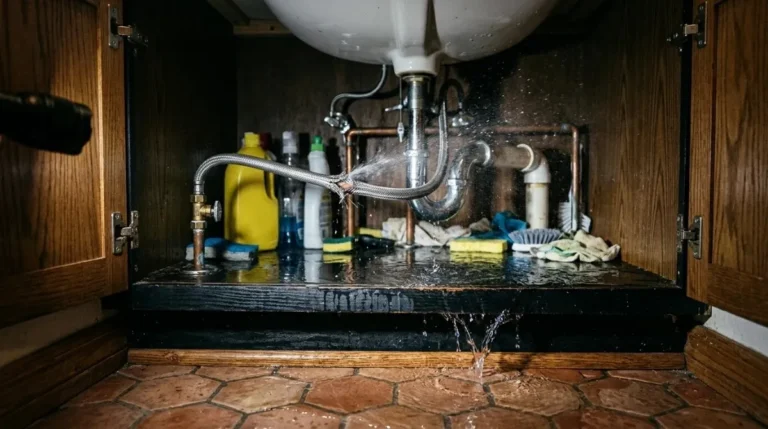
- The category of water. Clean supply-line water dries. Contaminated water means more material is removed rather than dried, which changes the whole scope.
- The weather outside. More on this next — it is the part specific to us.
Why the same job takes longer in monsoon season
Drying works by moving moisture from wet material into the air, then pulling it out of the air. Both halves have to work.
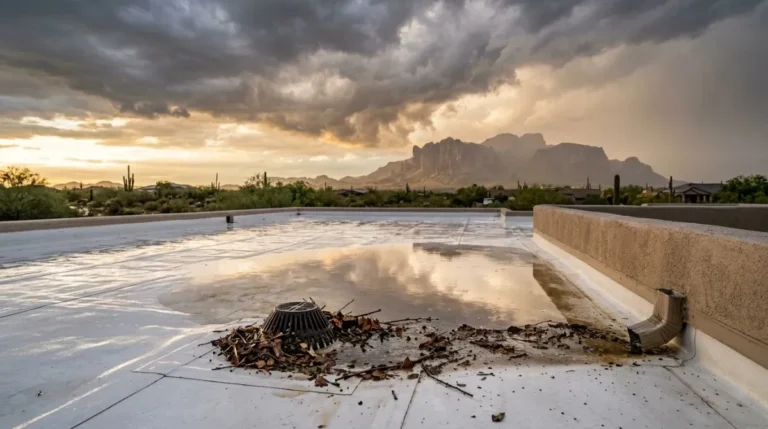
For most of the year Phoenix is the easiest place in America to dry a building — the outside air is exceptionally dry, so moisture leaves materials readily. Between June 15 and September 30 that advantage disappears. Outdoor dew points climb, the air the equipment is working against is already carrying moisture, and the dehumidifier has to work considerably harder to achieve the same result.
A loss that would have dried in three days in April can genuinely take five or six in August. Same house, same equipment, same technician. If you are told a job will take longer than you expected during monsoon season, that is the reason.
What the equipment is actually doing
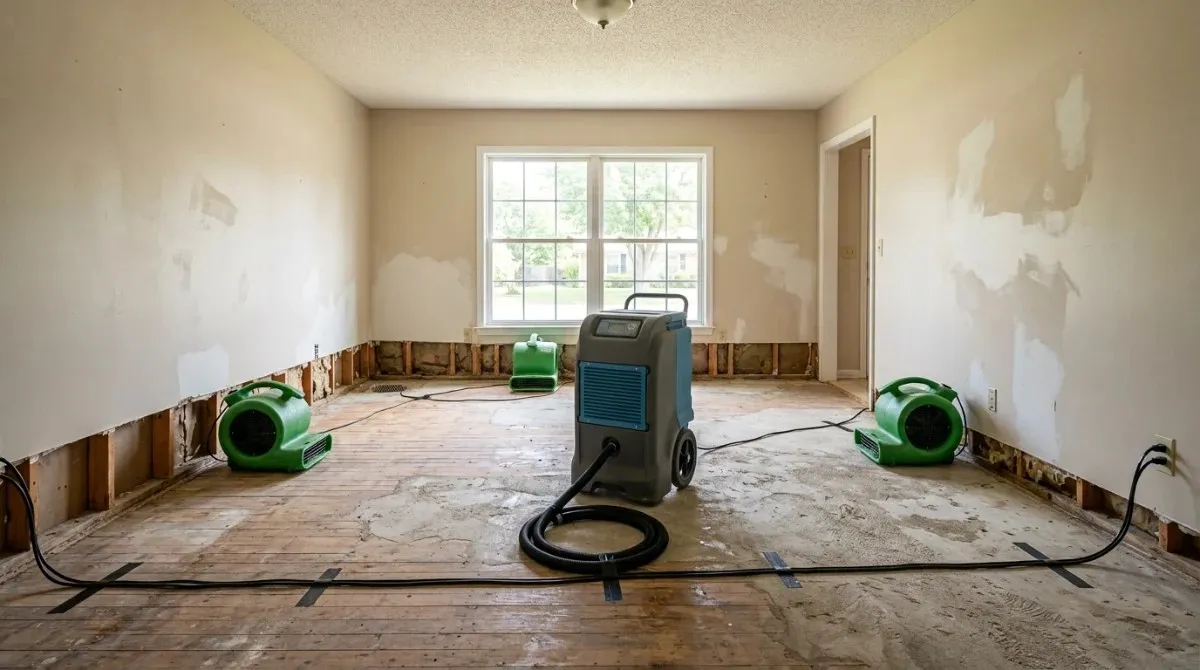
Air movers are not fans for comfort. They push a high volume of air across wet surfaces to break the thin layer of saturated air that sits against the material and slows evaporation.
Dehumidifiers remove that moisture from the room air. Without them the humidity simply builds and evaporation stalls — you would be moving water from the floor into the air and back again.
This is also why opening windows is usually the wrong instinct here, particularly in summer. You are inviting hot, humid outdoor air into a space where the equipment is trying to hold humidity down.
Why the equipment has to stay running
The most common way a dry-out fails is that the equipment gets switched off early — because it is loud, because it is using electricity, or because the room looks fine.
Surfaces dry first. The cavity behind them does not. Turn everything off on day three because the carpet feels dry, and the moisture still in the wall has nowhere to go and no airflow to carry it. Mold growth can begin within 24 to 48 hours where moisture remains, and a wall that was nearly dry can undo several days of work in a weekend.
Rough guide by material
| Material | Typical drying time |
|---|---|
| Carpet and pad, clean water | 2–3 days |
| Drywall, surface exposure | 3–5 days |
| Drywall with cavity involvement | 5 days to 2 weeks |
| Hardwood flooring | 1–3 weeks |
| Concrete slab | Up to a month |
Indicative only. The readings for your building are the answer, not this table.
Four questions worth asking your contractor
- What are today’s readings, and what is the target? A straight answer means monitoring is happening.
- Which reference material are you comparing against? Dry is relative to the building.
- Has anything gone into a cavity? This is what decides days versus weeks.
- Does this quote cover drying only, or putting it back? Mitigation and reconstruction are separate stages with separate timelines.
The one thing that shortens every timeline
Starting sooner. Drying should ideally begin within 24 to 48 hours of the water event. Every hour before that adds moisture further into materials, and depth is what turns a three-day job into a three-week one.
Nothing else on this page is as much within your control as the first phone call.
If it is happening now
One call connects you with a local restoration contractor covering Phoenix and the Valley. See water damage repair for the full process, or mold remediation if drying was delayed and you are past that stage.
Call (602) 962-2002 — emergency calls answered 24/7.